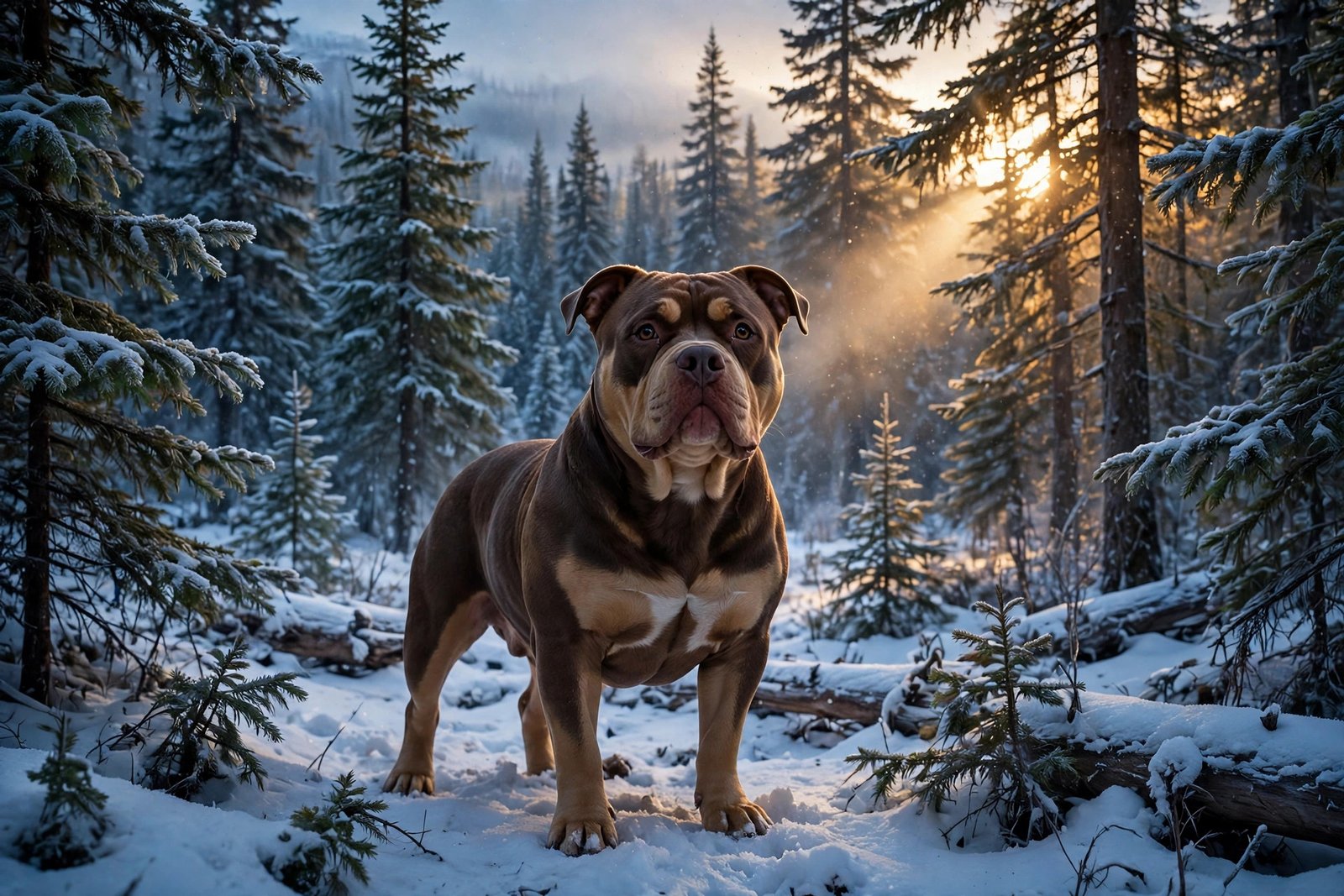
Seventy days. That is how long Bella Rose spent alone in the woods of Alaska — in country where bears roam, where the nights turn freezing, and where a loose dog faces traffic, weather, and wild animals every single day. She was an extra-large American Bully, chocolate and tan, not quite two years old. And for ten weeks, the only thing standing between her and the wilderness was the fact that one man refused to stop looking for her.
On the night of November 4, the search ended in a few quiet seconds. Bella Rose stepped into a pen her owner had built with his own hands, pawed at her own blanket — a smell she knew from home — and the door shut behind her. She was caught safely. She was home.
This is the story of a dog who survived seventy days in Alaska bear country, and of the small community that refused to let her be forgotten.
The day she vanished
It was August 26, 2026, outside the Twin Cities Veterinary Clinic in Soldotna, Alaska. Bella Rose had been brought in for a routine visit — her owner, Rufus Arroyo, had sent his brother to get her shot records updated before her second birthday. His brother was working with a broken arm that day, and in a moment that would haunt the family for months, Bella Rose slipped her leash.
Illustrative image
She ran across busy Kalifornsky Beach Road and straight into the woods. She was still wearing a purple buckle collar, an orange training collar, and a gray leash when she vanished — the leash trailing behind her, the detail that would later prove to be the clue that brought her home.
For most families, that would have been the start of a frantic few days of searching. For the Arroyos, it became something much longer. Days turned into weeks, and weeks turned into months, and Bella Rose did not come home.
Seventy days of searching
Rufus Arroyo is a Soldotna resident of twenty years who works on call at Central Peninsula Hospital. He fitted the search around his hospital shifts, day after day, for seventy days. He later told KTUU, Alaska’s News Source, that the search felt like a parent looking for a child. That was not a figure of speech. For him, Bella Rose was a member of the family, and bringing her home was a daily effort that never stopped, even as the odds grew longer.
He did not search alone. Kenai Peninsula Animal Lovers, a local animal group known as KPAL and led by realtor Kelly Griebel, lent traps and helped with the effort. Volunteers joined in. Flyers went up. Sightings were chased down. In a place where the wilderness starts at the edge of town, every day a dog stays lost is a day the odds get worse — but nobody in Soldotna was ready to give up on Bella Rose.
The tip that changed everything
Then a tip came in that changed the search. A dog dragging a leash had been seen at the Soldotna Landfill, a few miles from where Bella Rose had been lost. The gray leash she had worn since August made the report stand out. A loose dog with a leash trailing behind it, in that area, could only be one dog. The landfill became the center of the final effort.
Landfill staff allowed traps to be set on the property, and worker James Van Bruggen offered to stay late to help. Kenai Peninsula Borough Mayor Peter Micciche gave Arroyo permission to stay on landfill property overnight, so the watch did not have to end when the site closed. This was no longer one man’s search. It was a community effort — volunteers, landfill workers, and a borough mayor, all pulling in the same direction for one lost dog.
Illustrative image
A blanket, a pen, and 9:30 p.m.
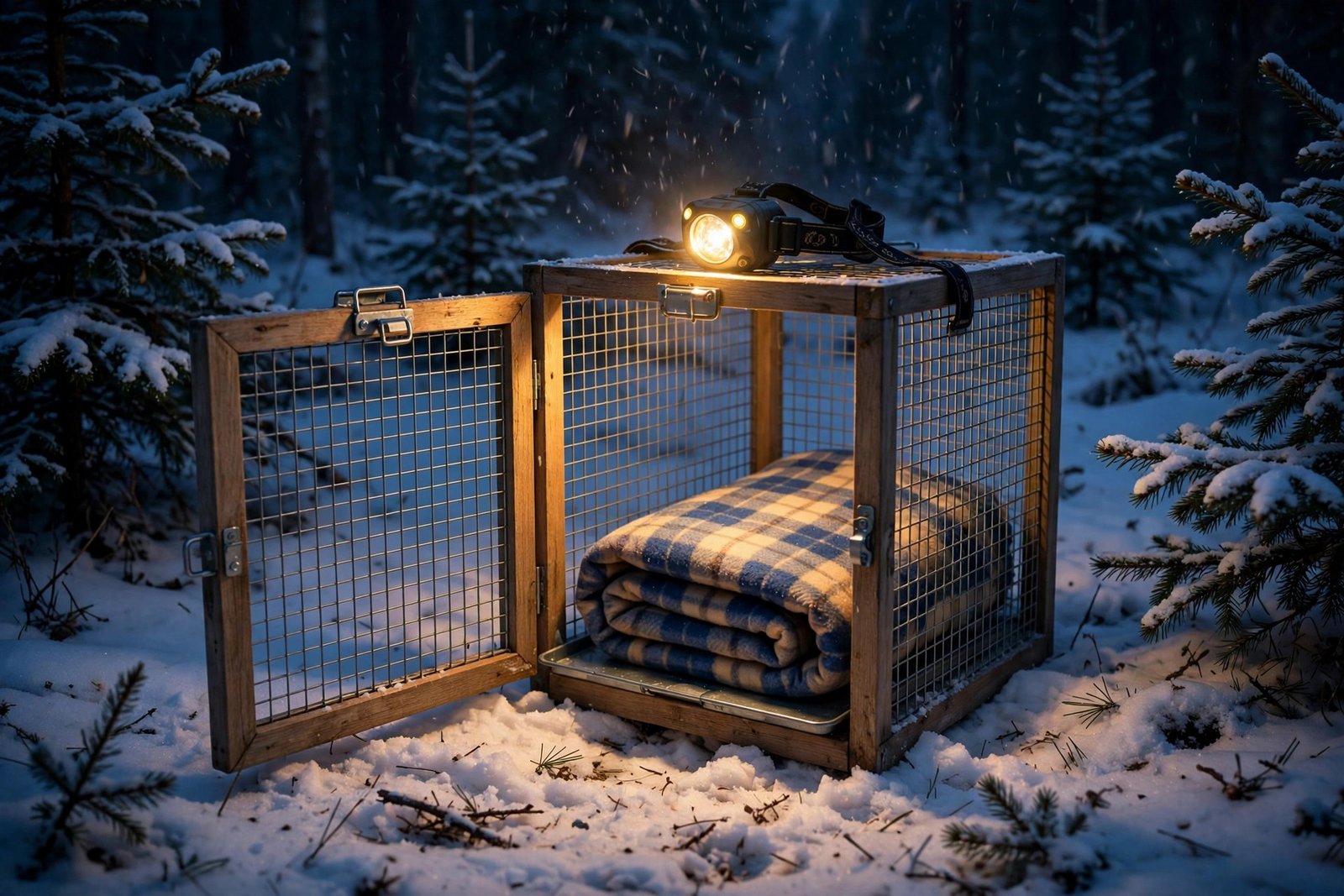
Arroyo built a pen that measured four feet by eight feet, fitted with a pressure plate trigger. When an animal steps on the plate, the door is released and closes. Inside the pen he put Bella Rose’s own blanket, carrying a smell she knew from home.
It was a simple plan, and it was the only plan that mattered. A familiar smell, in a safe place, in the dark. In bear country, in the middle of the night, a familiar blanket in a simple pen gave a lost dog a reason to step inside and stay.
At about 9:30 p.m. on November 4, it happened. Bella Rose stepped into the pen, pawed at her blanket, and the door shut behind her. She was caught safely — seventy days after she ran. The long search ended in a few quiet seconds, with a blanket and a closed door.
The timing nobody could explain
Arroyo also noted a detail that gave the night a deeper meaning for his family. Bella Rose was found exactly two years to the day, and to the hour, after her grandmother — a dog named Athena Rose — had died. For the family, that timing tied the homecoming to the memory of the older dog, as if one chapter had closed at the very moment another one reopened.
Some people will call that a coincidence. For the family that had searched for seventy days, it felt like something more — a reminder that the dogs we love never really leave us, and that sometimes, they find a way to come back.
Home at last
Bella Rose is now home recovering, according to KTUU. After seventy days outside, recovery is the next task — and it is a far better one than searching. She survived bears, traffic, freezing nights, and ten weeks alone in the woods, and she did it as a dog not yet two years old.
Illustrative image
Her story is also a picture of how a small community solves a hard problem together. Volunteers, landfill workers, a borough mayor, and one owner who refused to stop turned a single tip into a safe capture. Nobody did it alone. Everybody did a little. And a dog who had been lost for seventy days walked into a pen, found her blanket, and came home.
What Bella Rose’s story teaches us
There are lessons in Bella Rose’s seventy days that every dog owner should carry with them. A leash can slip at the worst possible moment, even on a routine trip, even with someone you trust holding it. A collar and a leash are not just equipment — in Bella Rose’s case, the gray leash she was still dragging was the detail that identified her in a stranger’s sighting and focused the whole search.
And then there is the lesson of not giving up. Seventy days is a long time to search. Most people would have stopped. Rufus Arroyo did not, and because he did not, his dog is sleeping at home tonight instead of somewhere in the Alaskan woods. Hope is not a plan on its own — but hope, plus a community, plus a blanket that smells like home, turned out to be enough.
Bella Rose survived seventy days in bear country. She came home because one man searched for seventy days, and because a whole town helped him do it. That is the whole story, and it is enough.
Sources: KTUU, Alaska’s News Source, reporting on the search for Bella Rose and her reunion on November 4, 2026, via Zark News, published November 8, 2026. All images in this article are illustrative and do not show Bella Rose herself.


One Comment on “Lost for 70 Days in Alaska Bear Country: Bella Rose the Dog Is Finally Home”