A vacation that turned into a month of fear
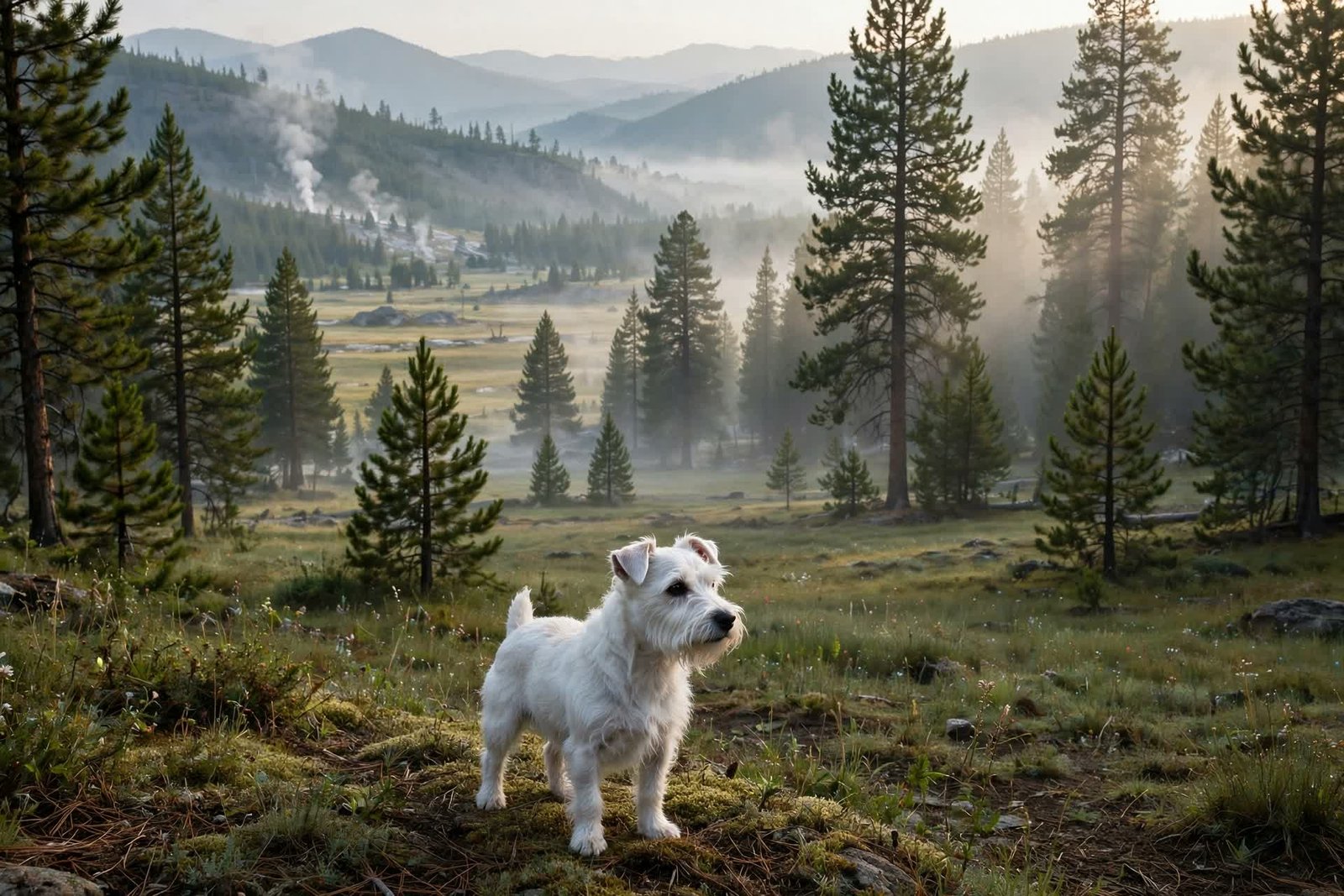
A family trip to Yellowstone National Park should have been a week of geysers, photographs, and quiet evenings in a cabin. For one California family, it became something very different. On September 10, their 10-year-old dog Luna slipped out of their cabin in the Canyon Village area — and did not come back. For 34 days, she was alone in one of America’s wildest national parks, a place of grizzly bears, wolves, coyotes, and nights that were already turning cold. People who loved her began to fear the worst. Then, on October 14, a small trap closed, and a little white dog was in her owner’s arms again. This is how Luna survived, how the search kept going when hope was fading, and what finally brought her home.
The door that changed everything
Luna had been left inside the cabin while her family explored the park. A “Do Not Disturb” sign was on the door. The family believes a housekeeping worker accidentally opened the door and Luna bolted. Staff chased her for hours, but she was already gone into the trees. That single moment matters because it shows how fast a normal holiday can unravel. No one in the reports suggests the family meant to leave her at risk, and the lodge side has noted that pets were not supposed to be left alone in cabins. The truth of who opened the door is less important than what followed: a small, senior dog was suddenly on her own in 3,500 square miles of wilderness, and the clock was already running against her.
A park that does not forgive mistakes
Yellowstone is beautiful, but it is not gentle. Early autumn temperatures there can fall to around 31 degrees Fahrenheit at night, according to National Park Service figures cited in the reporting, with daytime highs near 52 degrees. For a 10-year-old dog, that is a serious test. Add grizzly bears, wolves, and coyotes, and the odds look worse still. At one point, the family was told Luna had likely died, possibly after an encounter with a coyote. That is the fear every owner of a lost dog knows: not just that your dog is gone, but that the place where she is lost is actively dangerous. Luna, however, had one advantage that no one could have planned for. She had spent her first year living on the streets before she was adopted. The instincts from that early life — caution, movement, finding shelter — may have been exactly what kept her alive.
The sightings that kept hope alive
What kept the search going was that Luna kept being seen. She was spotted crossing road intersections, wandering through employee housing, and slipping into lodges through automatic doors. Again and again, she appeared near places her family had visited the day before she vanished. Rescuers began to believe she was not wandering at random. She seemed to be retracing her family’s steps, following the route of their last day together, looking for the people she had lost. That detail is what makes this story different from a simple lost-dog report. Luna was not just surviving. In her own way, she was searching too. Each sighting was a small piece of evidence that she was still alive, still moving, and still trying to get back.
Why chasing her would not work
It is natural to want to run after a lost dog, but rescuers asked people not to chase Luna. A frightened dog in a huge park will run farther, not closer, and every chase pushes her into new danger. Instead, the search became patient and careful. Katie Boucher, the volunteer leading the rescue effort through Norris Ark Training and Recovery Center in Montana, took over the search after the family learned of new sightings, days after they had left the park. The team tracked sightings, mapped where Luna had been seen, and waited for a pattern. Time was against them in another way too: the team’s special permit was due to expire on October 31, and roads and campgrounds were due to close for winter. If Luna was not found soon, the park itself would become harder to search.
The trap that could not use food
Here is the part of the story most people would never guess. In most lost-dog rescues, a trap is baited with food. In Yellowstone, that was not an option. Food in a trap could draw bears and other wildlife, putting Luna and the rescuers in danger. So the team used something else entirely: scraps from a family T-shirt and a pillowcase. The idea was simple and deeply human. Luna might not come for food, but she might come for the smell of home. A small doghouse was placed inside the trap to give her shelter from the storm. It was a quiet, careful plan, built on the belief that a dog who had been retracing her family’s steps would recognise the scent of the people she loved. That belief turned out to be right.
The morning she was found
On the morning of October 14, the trap closed, and Luna was inside. Boucher and one of the owners found her there. They took her to a veterinarian, where her owner held her during the examination. Boucher later told the Associated Press, “She’s alert and in good spirits,” adding, “I was crying all the way up here from the park.” The veterinarian found Luna underweight, which was expected after more than a month on her own, but otherwise healthy and ready to go home. Yellowstone spokesperson Linda Veress confirmed that the dog loose in the Canyon Village area had been captured and was alive and well. After 34 days, the search was over. A dog that many had feared was gone was back in the arms of the person she had been looking for all along.

What Luna’s story teaches every dog owner
Luna’s story is joyful, but it also carries a warning. First, never assume a lost dog will stay where you lost her. Dogs move, and they often move toward familiar smells, routes, and people. Second, do not chase a frightened dog. Sightings, patience, and a calm plan help more than a crowd running after her. Third, identification and preparation matter before a trip, not after one. A dog left in an unfamiliar room, even briefly, can be gone in seconds if a door opens. Finally, do not give up too soon. Luna’s family had been told she was probably dead. New sightings changed everything. For owners, rescuers, and shelters, that is the lesson worth keeping: as long as there are sightings, there is still a search.
A small dog, a very big park, and a family made whole
Luna did not survive Yellowstone because she was the biggest or strongest dog in the park. She survived because she kept moving, because she remembered her family, and because strangers refused to stop looking for her. A volunteer, a rescue centre, park staff, and the people who reported sightings all played a part in bringing one small dog home. That is why this story has travelled so far. It is not just about a dog who got lost. It is about a dog who kept trying to find her way back, and the people who made sure she did not have to do it alone. If you have ever lost a dog, even for an hour, you will understand why this reunion matters. Luna is home now. After 34 days in Yellowstone, that is nothing short of a miracle.
Sources: Good News Network (October 21, 2026), Associated Press reporting as cited there and by Parade, and Outside Online (updated October 14, 2026). Where sources disagree — on the cabin door and on exact weight loss — this article reports what is believed or reported, not what is proven.